


How do Christmas ornaments embody the warmth and artistic uniqueness of handcrafted artisans?
Release Time : 2025-12-22
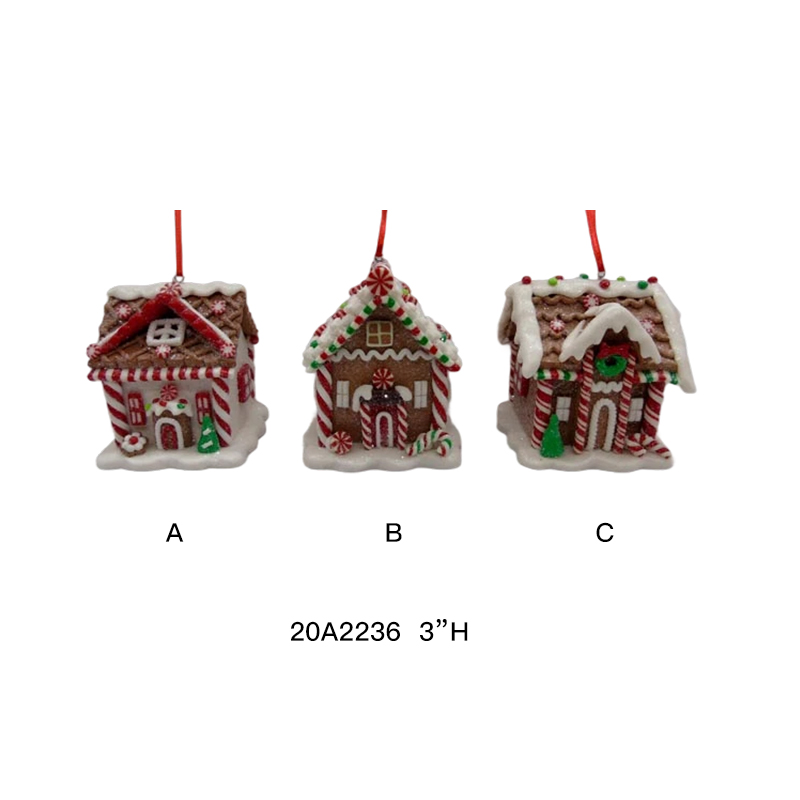
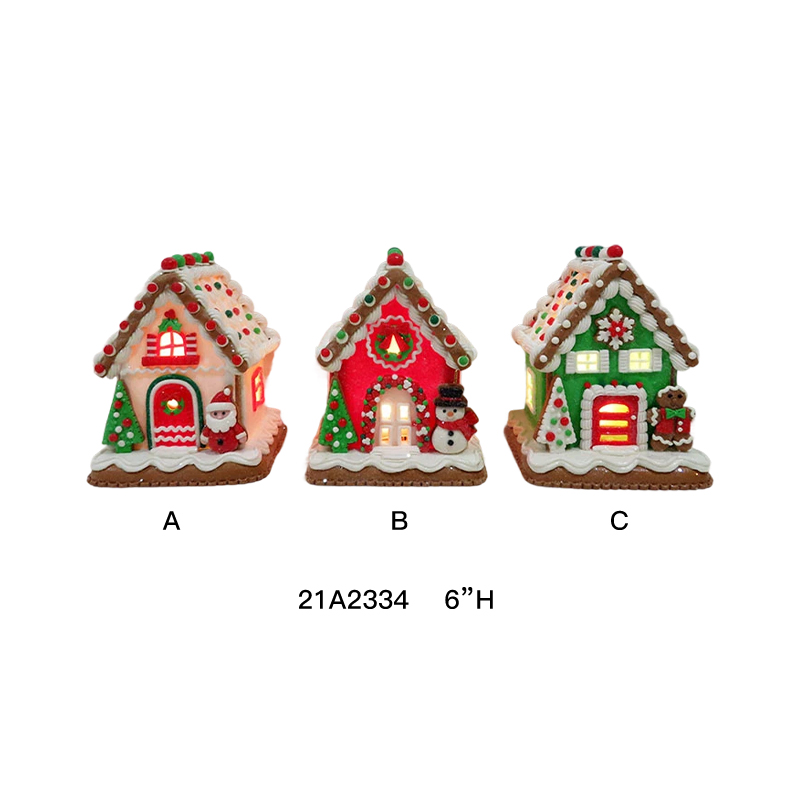
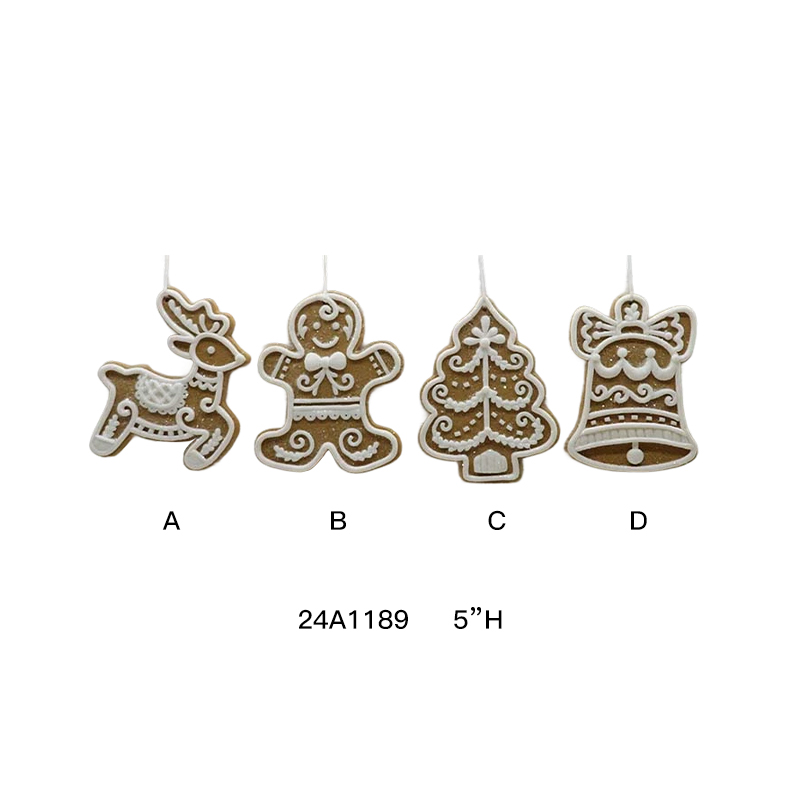
Among the dazzling array of Christmas ornaments, clay dough crafts, with their warm and rustic touch, delicate and vivid shapes, and unique handcrafted soul, quietly become the most heartwarming artistic expression in the festive atmosphere. Unlike mass-produced plastic or resin ornaments, these classic Santa Claus, snowman, and gingerbread man sets, sculpted, painted, and fired by artisans themselves, are not simply holiday symbols, but miniature sculptures carrying craftsmanship, emotion, and cultural memory—every curve, every stroke tells a story of human intervention.
1. Hand-Sculpting: Giving Characters Life and Personality
The starting point for clay dough crafts is the dialogue between the artisan's fingertips and natural clay. Using fine and malleable kaolin or special ceramic dough, artisans, with years of experience, hand-sculpt Santa's round belly, the snowman's endearing stacked body, and the gingerbread man's playful buttons and icing details. Even among Santa Claus figures, the facial expressions, beard curls, and hat brim curves of different artisans vary subtly—some smile kindly, some wink playfully, and some carry a hint of slyness. This unique "imperfection" is precisely the soul that machines cannot replicate. Each piece seems imbued with a personality, quietly telling its own story beneath the Christmas tree.
2. Glaze and Hand-Painting: The Poetry of the Holidays in Color
The coloring process is the epitome of artistry. Artisans use environmentally friendly mineral pigments or low-temperature glazes, meticulously layering patterns on clothing, facial expressions, and decorative details. Santa's red robe isn't a uniform bright red, but rather a wine red or warm vermilion with varying shades; the snowman's scarf may be adorned with hand-painted snowflake patterns; the "icing" on the gingerbread man flows like calligraphy, formed in a single stroke, full of rhythm. Some high-end pieces even employ multiple layers of glazing or gold leaf embellishment, presenting a soft sheen under light. These subtle variations in hand-painting make each set a limited-edition work of art, rather than a mass-produced replica.
3. Firing Process: The Essence of Time and Temperature
After shaping and painting, the piece is fired at a low temperature to harden the clay and permanently adhere the colors. The firing process itself is inherently uncertain—temperature fluctuations can cause minor cracks or color variations. Therefore, each successfully fired piece embodies the artisan's precise control of the firing temperature and profound understanding of the materials. This traditional craft of "dancing with fire" endows the ornaments with a warm, jade-like texture and enduring stability, allowing them to be passed down through generations and become an emotional carrier in family Christmas ceremonies.
4. The Condensation of Professional Skill
These are not simply clay Christmas ornaments, but finished handicrafts meticulously crafted by professional ceramic artists or folk art workshops. Their value lies not only in the material but also in the decades of accumulated modeling skills, color perception, and understanding of holiday culture. From proportional harmony to dynamic balance, from meticulous clothing to expressive faces, everything reflects professional-level aesthetics and craftsmanship. Often displayed in boutique home decor stores, museum gift shops, or given as high-end holiday gifts, these items symbolize respect for traditional craftsmanship and a profound interpretation of the holiday spirit.
5. Emotional Heritage: A Cultural Symbol Beyond Decoration
When a family takes this set of clay ornaments out of its box each Christmas, gently polishes it, and places it under the fireplace or Christmas tree, it transcends mere decoration, becoming an anchor of family memories. Children point to the snowman and say, "Grandpa gave this to me that year," and parents recall the warm scene of decorating together on a snowy night. This emotional connection cannot be replaced by cold industrial products. The warmth of the clay, the traces of handcraft, and the patina of time together weave together a Christmas narrative unique to this family.
In short, clay Christmas ornaments, with their simplest material, carry the richest human warmth. They remind us that the true beauty of the holidays lies not in dazzling lights and sounds, but in those small things carefully shaped by hands and gently treated by time—they stand silently, yet give the entire Christmas season a heartbeat.
1. Hand-Sculpting: Giving Characters Life and Personality
The starting point for clay dough crafts is the dialogue between the artisan's fingertips and natural clay. Using fine and malleable kaolin or special ceramic dough, artisans, with years of experience, hand-sculpt Santa's round belly, the snowman's endearing stacked body, and the gingerbread man's playful buttons and icing details. Even among Santa Claus figures, the facial expressions, beard curls, and hat brim curves of different artisans vary subtly—some smile kindly, some wink playfully, and some carry a hint of slyness. This unique "imperfection" is precisely the soul that machines cannot replicate. Each piece seems imbued with a personality, quietly telling its own story beneath the Christmas tree.
2. Glaze and Hand-Painting: The Poetry of the Holidays in Color
The coloring process is the epitome of artistry. Artisans use environmentally friendly mineral pigments or low-temperature glazes, meticulously layering patterns on clothing, facial expressions, and decorative details. Santa's red robe isn't a uniform bright red, but rather a wine red or warm vermilion with varying shades; the snowman's scarf may be adorned with hand-painted snowflake patterns; the "icing" on the gingerbread man flows like calligraphy, formed in a single stroke, full of rhythm. Some high-end pieces even employ multiple layers of glazing or gold leaf embellishment, presenting a soft sheen under light. These subtle variations in hand-painting make each set a limited-edition work of art, rather than a mass-produced replica.
3. Firing Process: The Essence of Time and Temperature
After shaping and painting, the piece is fired at a low temperature to harden the clay and permanently adhere the colors. The firing process itself is inherently uncertain—temperature fluctuations can cause minor cracks or color variations. Therefore, each successfully fired piece embodies the artisan's precise control of the firing temperature and profound understanding of the materials. This traditional craft of "dancing with fire" endows the ornaments with a warm, jade-like texture and enduring stability, allowing them to be passed down through generations and become an emotional carrier in family Christmas ceremonies.
4. The Condensation of Professional Skill
These are not simply clay Christmas ornaments, but finished handicrafts meticulously crafted by professional ceramic artists or folk art workshops. Their value lies not only in the material but also in the decades of accumulated modeling skills, color perception, and understanding of holiday culture. From proportional harmony to dynamic balance, from meticulous clothing to expressive faces, everything reflects professional-level aesthetics and craftsmanship. Often displayed in boutique home decor stores, museum gift shops, or given as high-end holiday gifts, these items symbolize respect for traditional craftsmanship and a profound interpretation of the holiday spirit.
5. Emotional Heritage: A Cultural Symbol Beyond Decoration
When a family takes this set of clay ornaments out of its box each Christmas, gently polishes it, and places it under the fireplace or Christmas tree, it transcends mere decoration, becoming an anchor of family memories. Children point to the snowman and say, "Grandpa gave this to me that year," and parents recall the warm scene of decorating together on a snowy night. This emotional connection cannot be replaced by cold industrial products. The warmth of the clay, the traces of handcraft, and the patina of time together weave together a Christmas narrative unique to this family.
In short, clay Christmas ornaments, with their simplest material, carry the richest human warmth. They remind us that the true beauty of the holidays lies not in dazzling lights and sounds, but in those small things carefully shaped by hands and gently treated by time—they stand silently, yet give the entire Christmas season a heartbeat.