


Besides adding beauty, what special function does the icing coating on clay Christmas ornaments serve in terms of dust protection?
Release Time : 2026-01-05
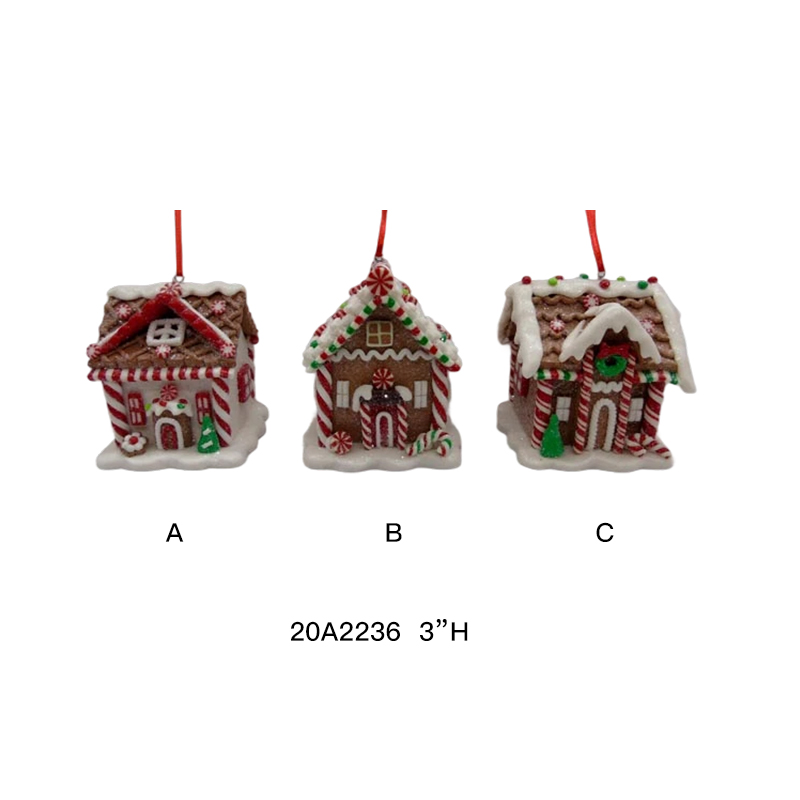
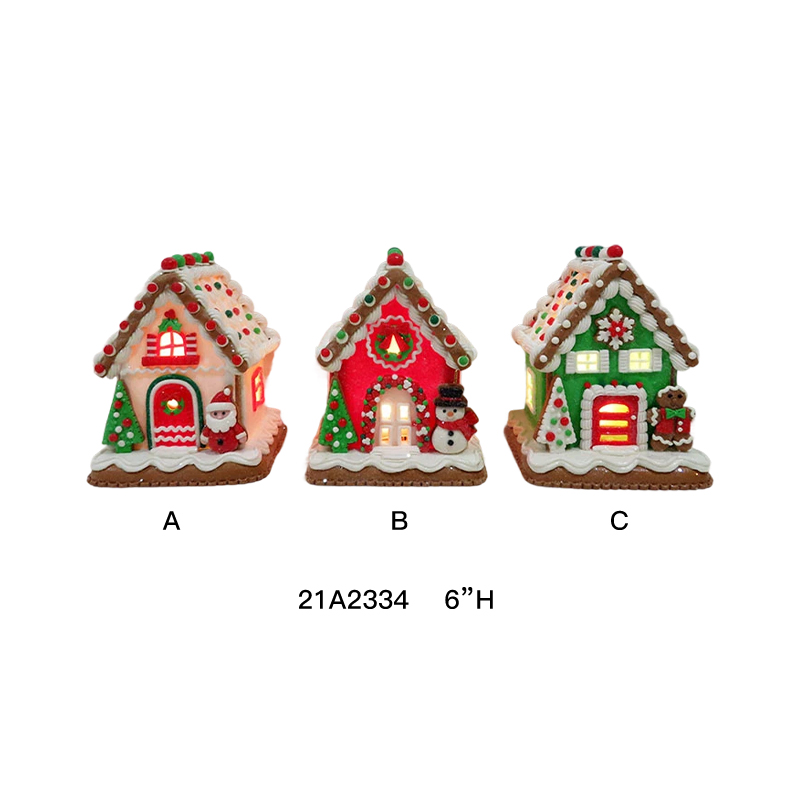
In creating a festive atmosphere, clay Christmas ornaments, with their handcrafted texture, warm colors, and realistic gingerbread house-like shapes, have become popular festive decorations in many homes and boutiques. These non-DIY crafts are shaped and baked using professionally formulated clay dough, carefully decorated with candy-like accessories, and then covered with a layer of fine white icing, complemented by classic Christmas colors such as red, green, and gold, creating a sweet and warm holiday atmosphere. However, this seemingly purely visual "icing" actually plays an indispensable functional role—especially in dust protection. Through physical sealing and optimized surface properties, it significantly improves the durability and ease of maintenance of the ornaments.
1. Dense Coating Forms a Physical Barrier, Preventing Dust Adhesion
Clay dough itself is porous, and untreated surfaces easily attract dust, oil fumes, and fiber particles from the air, eventually appearing dull and old, losing the vibrant look expected for the festival. Professionally made "icing," however, is not edible syrup, but a high-coverage coating made from water-based acrylic resin, mineral fillers, and environmentally friendly pigments. After spraying or hand-painting, it forms a continuous, dense, and slightly smooth film on the clay surface, effectively sealing the original pores. This film acts like an invisible protective shield, making it difficult for dust to penetrate the material, keeping it only on the surface and greatly reducing the risk of deep contamination.
2. Smooth Surface Reduces Static Electricity Adsorption, Minimizing Dust Retention
Ordinary untreated clay or matte coatings easily generate static electricity due to friction, and static electricity is precisely the "magnet" that attracts tiny dust particles from the air. Icing coatings typically incorporate antistatic agents in their formulation and undergo fine polishing or leveling processes to achieve a low-roughness, slightly smooth surface. This surface not only has a soft visual appeal and mimics the creamy texture of real icing, but also significantly reduces static electricity buildup. Experiments show that clay ornaments coated with a high-quality icing layer have over 40% less surface dust compared to uncoated samples in the same environment, with the effect being particularly noticeable in dry, heated rooms during winter.
3. Hydrophobic and Oleophobic Properties Enhance Daily Stain Resistance
Some high-end icing coatings also possess slight hydrophobic and oleophobic properties. When airborne oil particles or moisture condense and settle on the surface, they do not easily spread or penetrate, but instead form tiny droplets or particles that are easily wiped away with a soft brush or dry cloth. This "easy-clean" characteristic is especially important for ornaments displayed for extended periods—users do not need frequent washing; simple dusting is sufficient to restore their new appearance, greatly extending the product's display life.
4. Color Stability and Dust Resistance Work Together to Maintain Festive Visual Appeal
Classic Christmas color schemes quickly appear dull and worn when covered in dust, diminishing the festive atmosphere. The icing coating not only boasts stable color and resists UV yellowing, but its dust-proof function also directly ensures the long-lasting vibrancy of the overall color. White icing areas remain dust-free, red candy decorations stay clean, and green roof details are clearly visible—this pristine visual appearance is the key difference between high-quality holiday decorations and inexpensive crafts.
5. Safe and Environmentally Friendly, Suitable for Home Holiday Environments
It's worth noting that the icing coating used for clay dough decorations is non-toxic and odorless, posing no health risks even if children come into close contact or occasionally touch it. Furthermore, its chemical properties are stable after film formation, and it does not release volatile substances, ensuring safety for long-term placement in enclosed spaces.
The icing on the surface of clay dough Christmas ornaments is far more than just a sweet visual embellishment. It's an intelligent coating that integrates aesthetics, protection, and practicality, silently resisting dust and protecting the cleanliness and brilliance of holiday decorations. It is this meticulous attention to detail that allows a small Christmas ornament to not only brighten up the festive space but also accompany the family year after year, becoming a treasured carrier of holiday memories. In today's pursuit of ritual and quality of life, this "invisible guardian" is precisely the most touching embodiment of craftsmanship.
1. Dense Coating Forms a Physical Barrier, Preventing Dust Adhesion
Clay dough itself is porous, and untreated surfaces easily attract dust, oil fumes, and fiber particles from the air, eventually appearing dull and old, losing the vibrant look expected for the festival. Professionally made "icing," however, is not edible syrup, but a high-coverage coating made from water-based acrylic resin, mineral fillers, and environmentally friendly pigments. After spraying or hand-painting, it forms a continuous, dense, and slightly smooth film on the clay surface, effectively sealing the original pores. This film acts like an invisible protective shield, making it difficult for dust to penetrate the material, keeping it only on the surface and greatly reducing the risk of deep contamination.
2. Smooth Surface Reduces Static Electricity Adsorption, Minimizing Dust Retention
Ordinary untreated clay or matte coatings easily generate static electricity due to friction, and static electricity is precisely the "magnet" that attracts tiny dust particles from the air. Icing coatings typically incorporate antistatic agents in their formulation and undergo fine polishing or leveling processes to achieve a low-roughness, slightly smooth surface. This surface not only has a soft visual appeal and mimics the creamy texture of real icing, but also significantly reduces static electricity buildup. Experiments show that clay ornaments coated with a high-quality icing layer have over 40% less surface dust compared to uncoated samples in the same environment, with the effect being particularly noticeable in dry, heated rooms during winter.
3. Hydrophobic and Oleophobic Properties Enhance Daily Stain Resistance
Some high-end icing coatings also possess slight hydrophobic and oleophobic properties. When airborne oil particles or moisture condense and settle on the surface, they do not easily spread or penetrate, but instead form tiny droplets or particles that are easily wiped away with a soft brush or dry cloth. This "easy-clean" characteristic is especially important for ornaments displayed for extended periods—users do not need frequent washing; simple dusting is sufficient to restore their new appearance, greatly extending the product's display life.
4. Color Stability and Dust Resistance Work Together to Maintain Festive Visual Appeal
Classic Christmas color schemes quickly appear dull and worn when covered in dust, diminishing the festive atmosphere. The icing coating not only boasts stable color and resists UV yellowing, but its dust-proof function also directly ensures the long-lasting vibrancy of the overall color. White icing areas remain dust-free, red candy decorations stay clean, and green roof details are clearly visible—this pristine visual appearance is the key difference between high-quality holiday decorations and inexpensive crafts.
5. Safe and Environmentally Friendly, Suitable for Home Holiday Environments
It's worth noting that the icing coating used for clay dough decorations is non-toxic and odorless, posing no health risks even if children come into close contact or occasionally touch it. Furthermore, its chemical properties are stable after film formation, and it does not release volatile substances, ensuring safety for long-term placement in enclosed spaces.
The icing on the surface of clay dough Christmas ornaments is far more than just a sweet visual embellishment. It's an intelligent coating that integrates aesthetics, protection, and practicality, silently resisting dust and protecting the cleanliness and brilliance of holiday decorations. It is this meticulous attention to detail that allows a small Christmas ornament to not only brighten up the festive space but also accompany the family year after year, becoming a treasured carrier of holiday memories. In today's pursuit of ritual and quality of life, this "invisible guardian" is precisely the most touching embodiment of craftsmanship.